
SpareBank 1 Sør-Norge's transition plan
SpareBank 1 Sør-Norge's ambition is to be the customer's ally and contribute to financing the transition
SpareBank 1 Sør-Norge's ambition is to be the customer's ally in the sustainability transition, and at the same time our goal is to achieve net-zero emissions from our loan portfolio by 2050.
lt is not enough to just set goals and targets for ourselves. Our transition plan will guide us and show us whether we are on track or not. That being said; We know that the path will change as we gain more knowledge and data quality improve. A good and credible transition plan will ensure that SpareBank 1 Sør-Norge has a business model that stands strong both today and in the future.
We need to reduce emissions as quickly as possible and restructure society to limit climate change. By the end of 2050, emissions must be reduced by 90-95 percent compared with the emissions in 1990. Some industries will find it impossible to reduce emissions by that much. This means that many industries need to get down to zero or must ensure a net sequestration of atmospheric CO2 if we are to reach our overall goals.
The transition that society and our customers will have to undergo over the next few decades will certainly be demanding, although it will also offer several opportunities. In this first version of our transition plan, the most material industries are included: Commercial Property, Shipping, Oil and Gas, Residential real estate and Agriculture.
The path to a zero-emissions society will change in the years to come. The plan will be further developed and expanded to encompass an increasingly large part of the loan portfolio. The important thing now, though, both for SpareBank 1 Sør-Norge and our customers, is the direction we are now presenting in our transition plan.
We as a bank cannot implement this transition alone. We will be dependent on several external factors, whether that be technological developments, policies, regulations or market changes. SpareBank 1 Sør-Norge will support all customers with the transition by providing good advice and offering financing.

Commercial Real Estate
Commercial real estate accounts for approximately 12 percent of the total loan portfolio and is thus the largest industry in corporate market lending. The emissions associated with energy consumption (Scope 2) are less than 1 percent of the portfolio emissions.
Although emissions from energy use in buildings are relatively low in Norway due to the predominance of renewable energy sources, it remains crucial to reduce consumption from a climate perspective. This reduction will help to allocate renewable energy for the decarbonization of other industries.
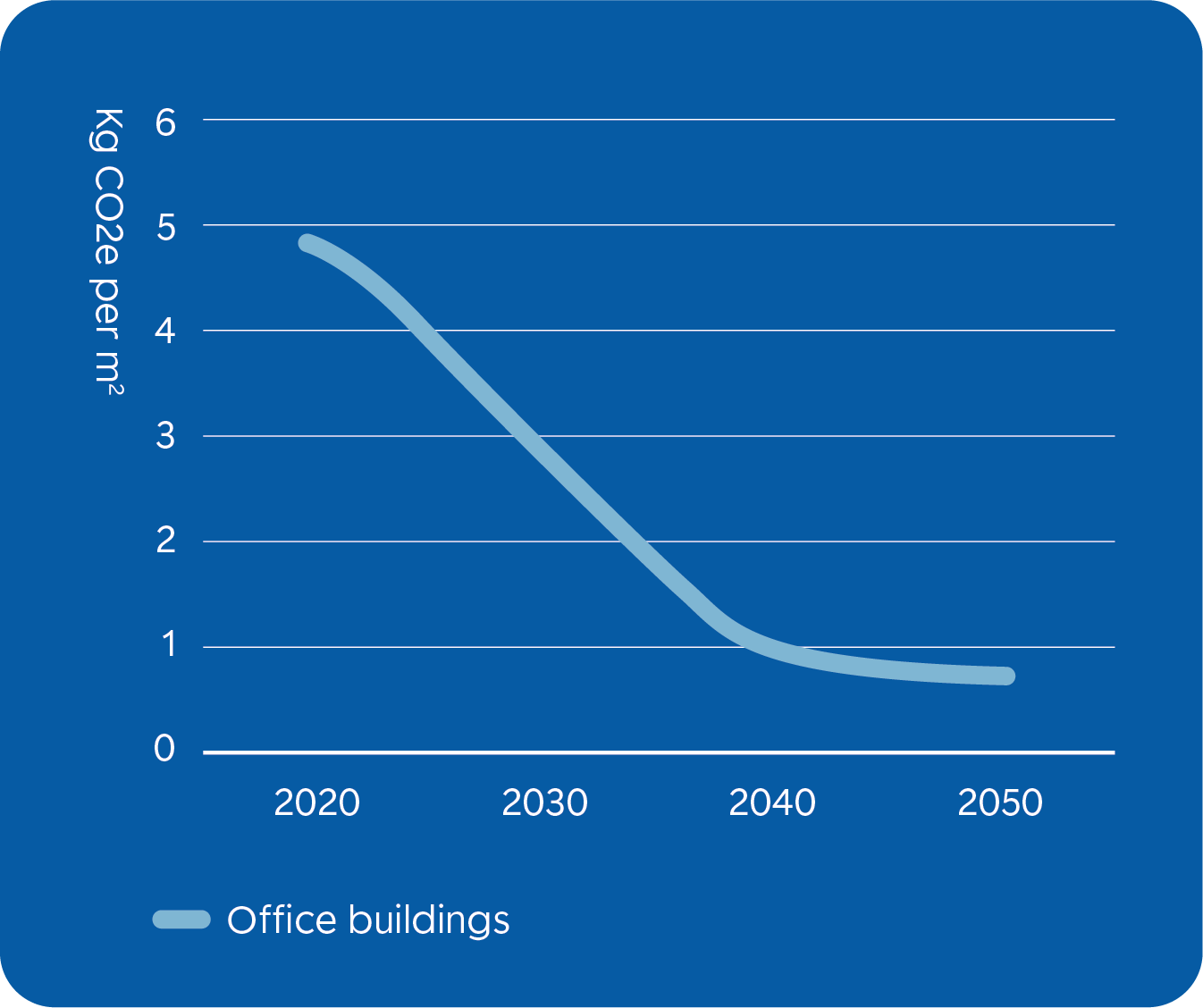
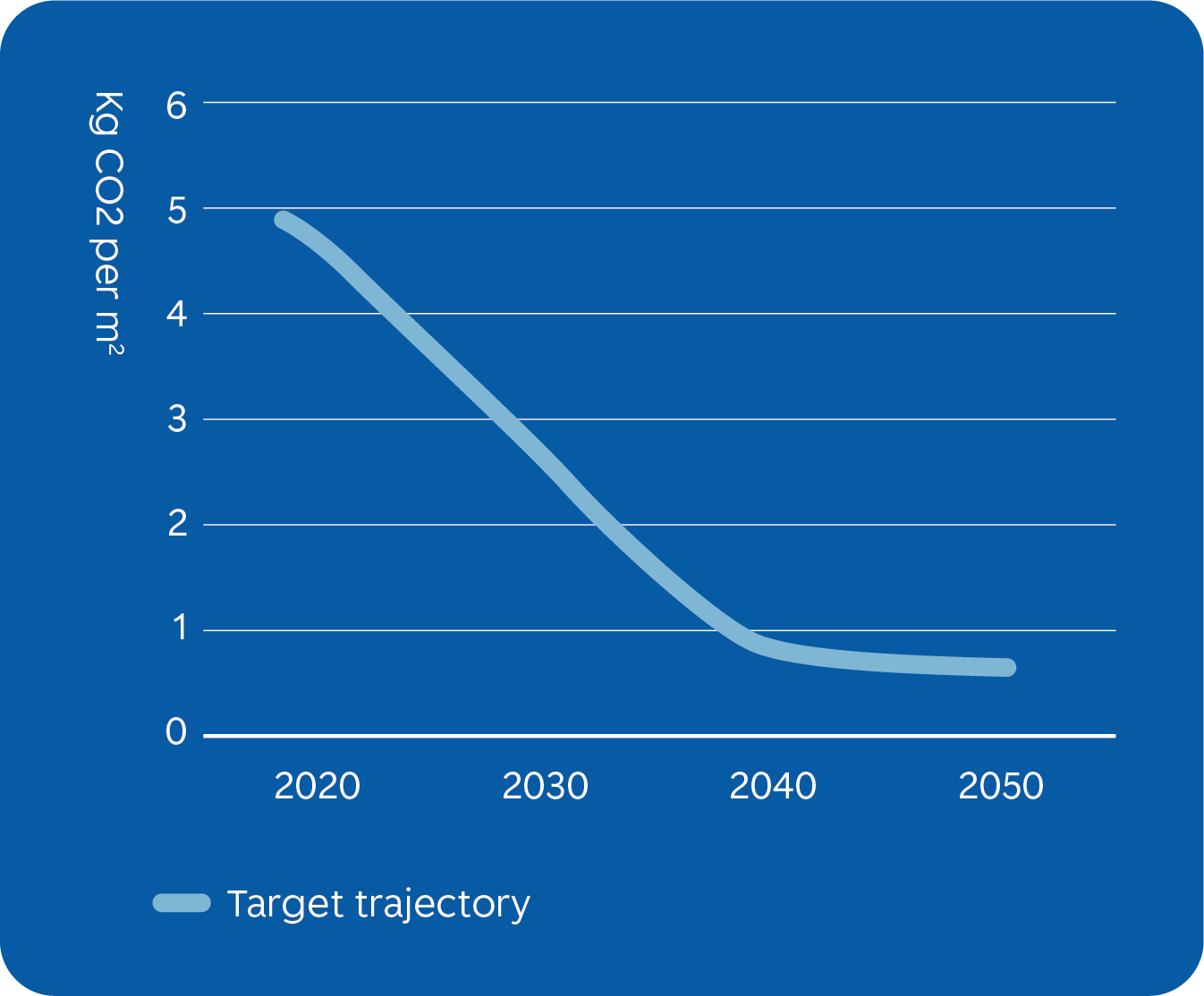
The target trajectory is stated in CO₂e per m2 and is based on the Carbon Risk Real Estate Monitor (CREEM), an EU funded project that has set target trajectories for different categories of buildings in each country. The figure shows the target trajectory for office buildings as an example, where emissions per m2 must be reduced by 44 percent from the 2020 level by 2030.
This will be done by consuming less energy and decarbonizing the power system.
Shipping
Shipping accounts for approximately 80 percent of the transport of world trade and is the most effective transport method over longer distances. For SpareBank 1 Sør-Norge, it accounts for under 2 percent of the lending volume, but at the same time accounts for around 30 percent of the total emissions from the portfolio.
Even though it is an efficient form of transport for goods over longer distances, it is an emission-intensive industry that needs to transition to more sustainable energy consumption to reach the global emission targets.
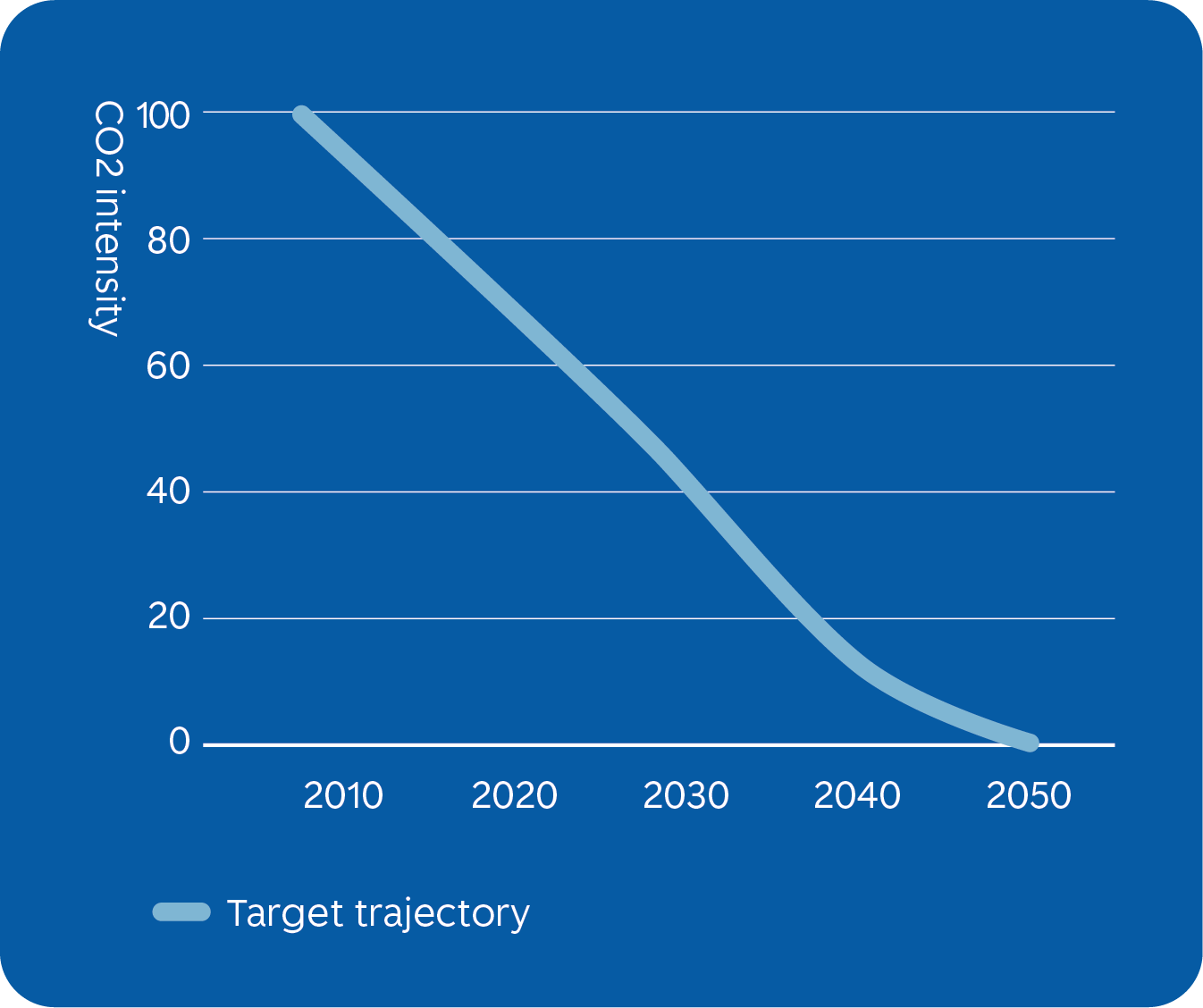
The shipping target pathway is based on the Poseidon Principles, which SpareBank 1 Sør-Norge signed in 2020 and has reported in line with since 2021. The Poseidon Principles is a global collaboration between banks designed to measure and disclose emissions from financed shipping portfolios. Fuel consumption and distance sailed are reported annually for each vessel. These are used to calculate the vessels' CO₂ emissions per nautical mile that are to be reduced in line with the pathway.
Offshore
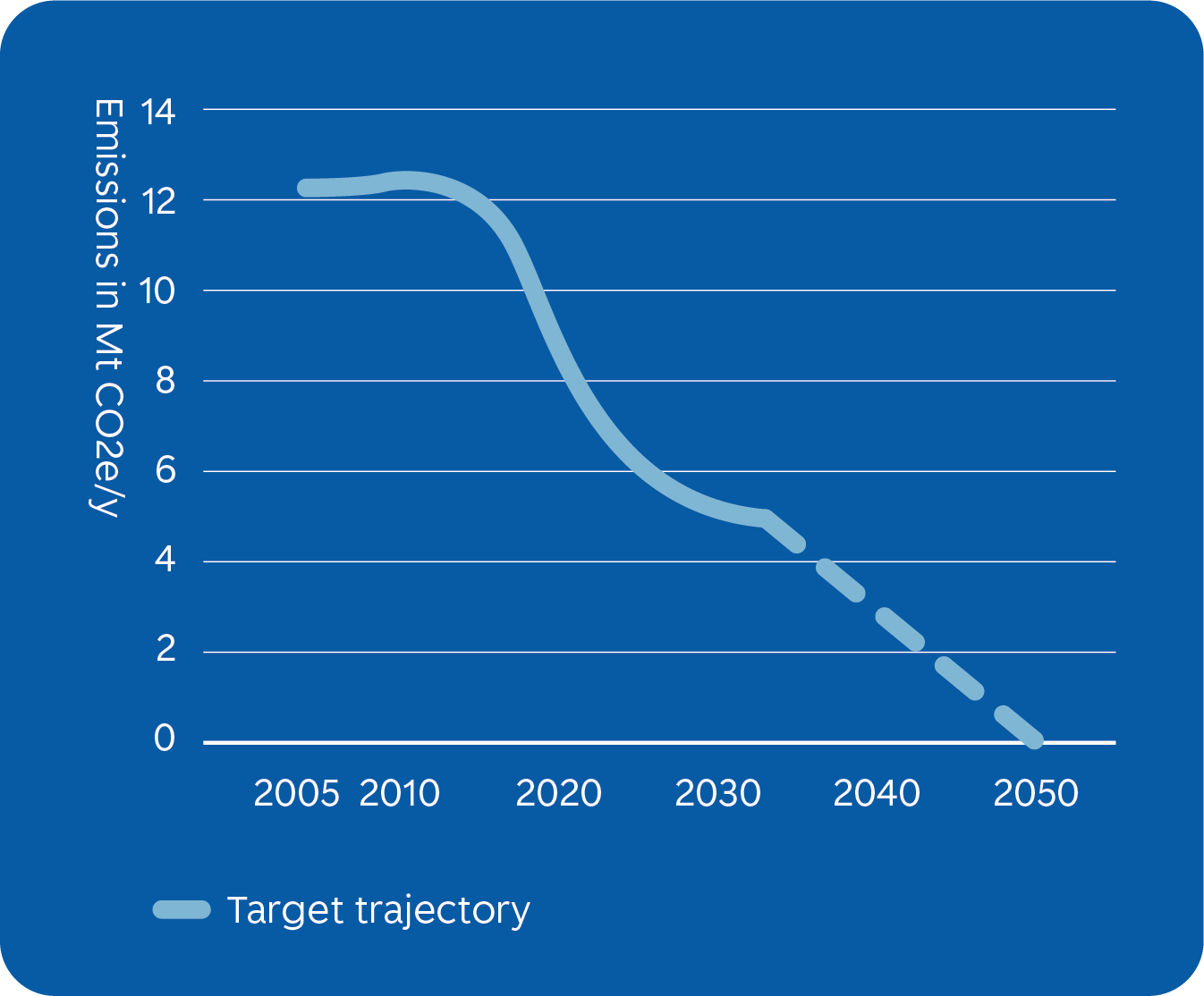
The offshore industry, with oil and gas, is an important part of the global energy system since it accounts for about 50 percent of the world’s energy consumption. The combustion of oil and gas is also one of the largest drivers of CO₂ emissions in the atmosphere, contributing to global warming. While the largest emissions are associated with combustion, there are also significant emissions from production and extraction on the Norwegian continental shelf. Emissions from this industry on the Norwegian shelf amount to 13 million tonsof CO₂e, more than a quarter of Norway’s total emissions.
SpareBank 1 Sør-Norge has exposure within offshore vessels, drilling and exploration, and production (E&P), which together account for 9.9 percent (9.8 percent offshore and drilling and 0.1 percent oil and gas) of the bank’s total emissions from its lending portfolio. Nevertheless, this is an industry that must transition. The target pathway is based on goals for the continental shelf set by Offshore Norway and the government: a 50 percent reduction from 2005 levels by 2030, and further to 90–95 percent by 2050, which we support.
Agriculture
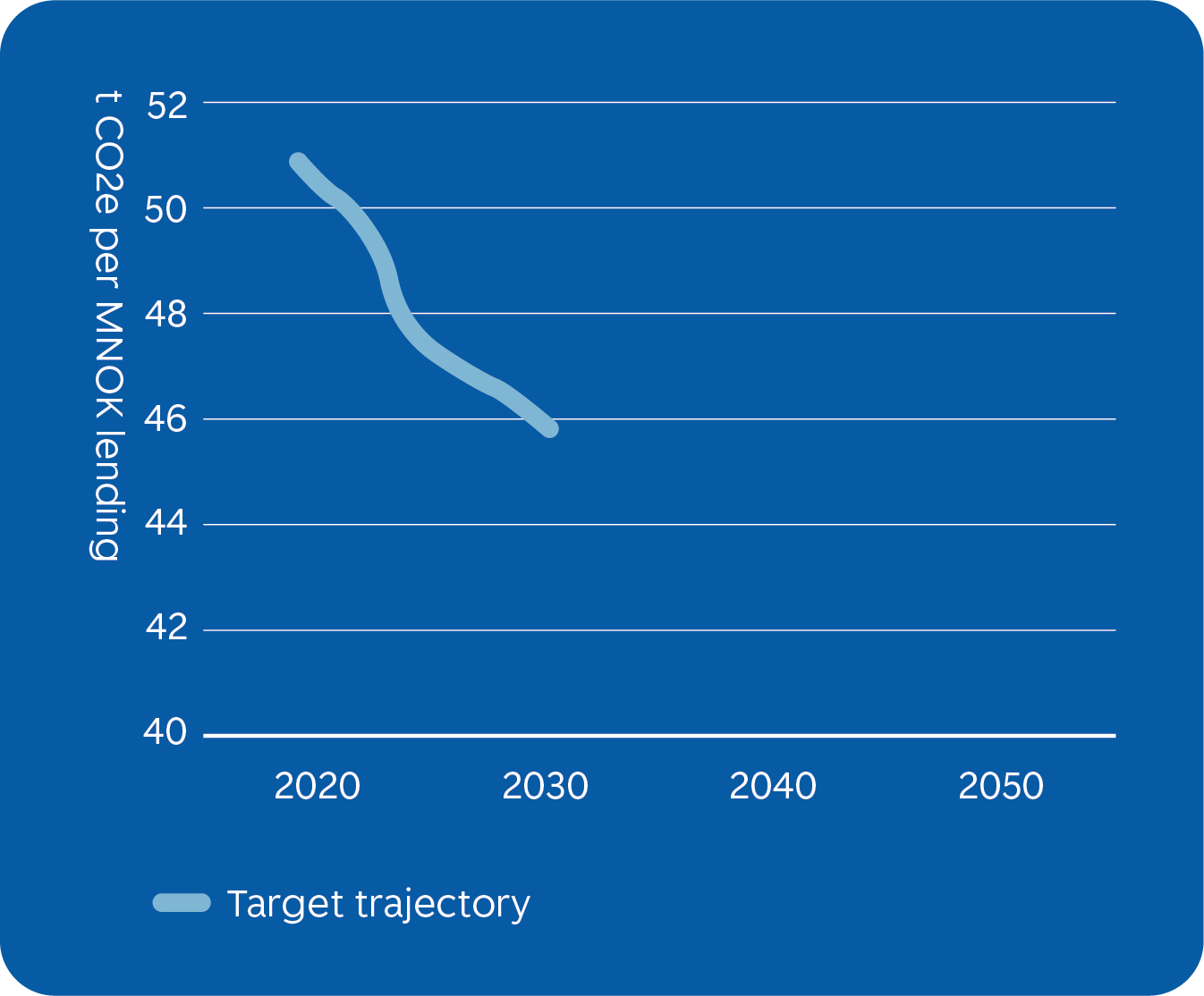
Agriculture is greenhouse gas-intensive and is one of the industries with the highest emissions in Norway with 7.2 million tons of CO₂e. The industry has agreed to cut greenhouse gas emissions by 5 million tons of CO₂e in the period 2021-2030.
This means a reduction of 11.5 percent per year in 2030 compared to the 2020 trajectory.
For SpareBank 1 Sør-Norge, the lending portfolio to agricultural customers around 2,5 percent of the total lending volume, around 27 percent of the total emissions from the portfolio.
Residential Real Estate
Norwegian households are estimated to account for 20-30 percent of energy consumption in Norway. NVE estimates the energy efficiency potential for houses to be 3 TWh, and 1 TWh for apartment buildings.
For SpareBank 1 Sør-Norge, financing residential properties accounts for over 60 percent of the total lending activities. By contributing to the increased energy efficiency in our property portfolio, we will help reduce the carbon emissions from the mortgage portfolio, while also freeing up electricity that can be used for the necessary transition in other parts of society.
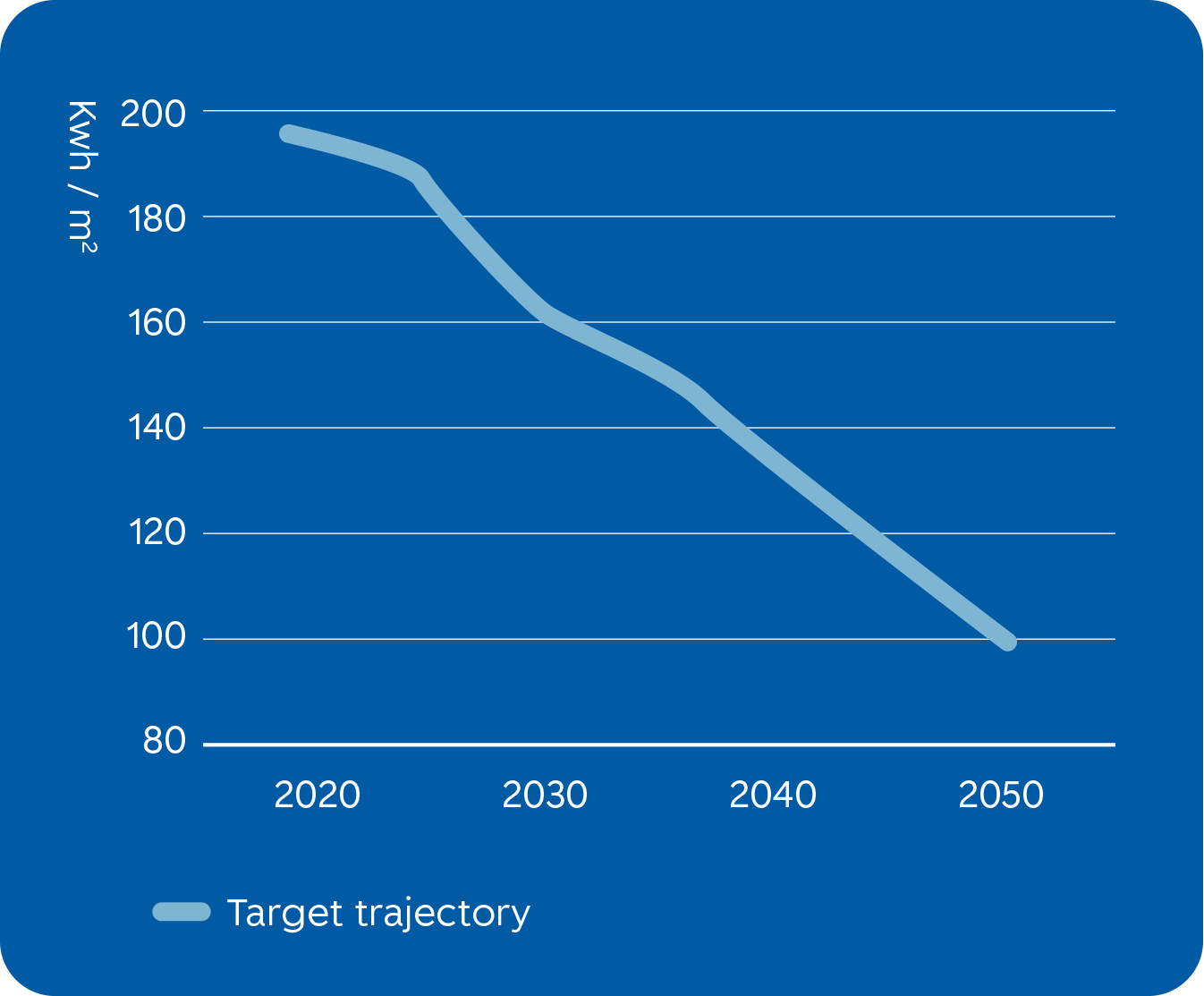
The target pathway is expressed in kWh/m² and is based on the EU’s Energy Performance of Buildings Directive, which sets targets for an average reduction in primary energy demand of 16 percent by 2030 and 20–22 percent by 2035. By 2050, the objective is for the building stock to be aligned with the ambition of a zero‑emission building stock. In addition to reduced energy consumption, emissions from the power system are expected to decline further through the phase‑out of fossil energy sources, which is necessary to achieve the overarching climate targets.
Own operations
SpareBank 1 Sør-Norge takes a holistic approach to net-zero emissions. This encompasses emissions from our own operations (Scope 1 and 2); supply chain (Scope 3, categories 1-14); and emissions arising from financing our customers' transition to net-zero emissions (Scope 3, category 15).
In order to be a credible partner for our customers' transition to net-zero emissions, we aim to lead by example. We have set targets for 2030 to reduce the carbon footprint from our own operations (Scope 1, Scope 2 and upstream Scope 3).
SpareBank 1 Sør-Norge has set targets for Scope 1, 2 and 3 that align with our climate goals and Norway’s commitments under the Paris Agreement.
- Scope 1: 100 percent reduction by 2028
- Scope 2: Reduction in accordance with the CRREM pathway
- Scope 3 upstream: 55 percent reduction by 2030 and net-zero by 2050